Say this sentence out loud in English: "I want a coffee."
How long did it take? Less than a second. You didn't think about it. You didn't retrieve "I" then "want" then "a" then "coffee" and assemble them in the right order. The whole phrase came out as a single unit. Instantly. Automatically.
Now imagine a Spanish learner trying to say the same thing. They recall that "want" is "querer." Wait — that's the infinitive. They need the first person. "Quiero." Then "a" — is it "un" or "una"? Coffee is masculine, so "un." Then "café." They assemble: "quiero... un... café."
Three seconds. Halting. Unnatural. And by the time they've finished, the conversation has moved on.
The difference between these two experiences isn't vocabulary size. It isn't grammar knowledge. It's how the language is stored in the brain.
You store "I want a coffee" as a single chunk. The Spanish learner stores "querer," "un/una," and "café" as separate pieces that need real-time assembly. Same meaning. Completely different brain process. And that difference is the reason one sounds fluent and the other doesn't.
What Is a Chunk?
In cognitive science, a chunk is a unit of information that your brain treats as a single item. The concept was first described by George Miller in his landmark 1956 paper "The Magical Number Seven, Plus or Minus Two," which showed that human working memory can hold roughly 7 items at a time — but that the size of each item is flexible.
A single letter is an item. But so is a word. And so is a phrase. Your brain can compress multiple pieces of information into one chunk, effectively expanding how much you can hold in working memory at once.
When you first learn a phone number, each digit is a separate item: 0-7-7-0-0-9-1-2-3-4-5. That's 11 items — more than working memory can handle. But you naturally chunk it: 077-009-12345. Now it's three items. Easy to hold, easy to recall.
Language works the same way. When you first learn Spanish, "quiero un café" is three separate items that each require retrieval and assembly. But once your brain chunks it, "quiero un café" becomes one item. One retrieval. One production. Instant.
This is the difference between halting speech and fluent speech. It's not about knowing more words. It's about how many words your brain has compressed into single chunks.
How Native Speakers Actually Talk
Linguist Alison Wray spent years studying how native speakers produce language. Her research, published in "Formulaic Language and the Lexicon" (2002), revealed something that surprised many in the field: native speakers don't construct most of their sentences from scratch.
Instead, native speech is largely composed of formulaic sequences — pre-built multi-word units that are stored and retrieved as wholes. Phrases like "by the way," "as a matter of fact," "I was wondering if," "do you know what I mean," and thousands of others aren't assembled word by word in real-time. They're pulled from memory as complete units.
Wray estimated that a significant proportion of natural speech is formulaic. Native speakers have thousands of these pre-built chunks stored in procedural memory, and they deploy them automatically at conversational speed.
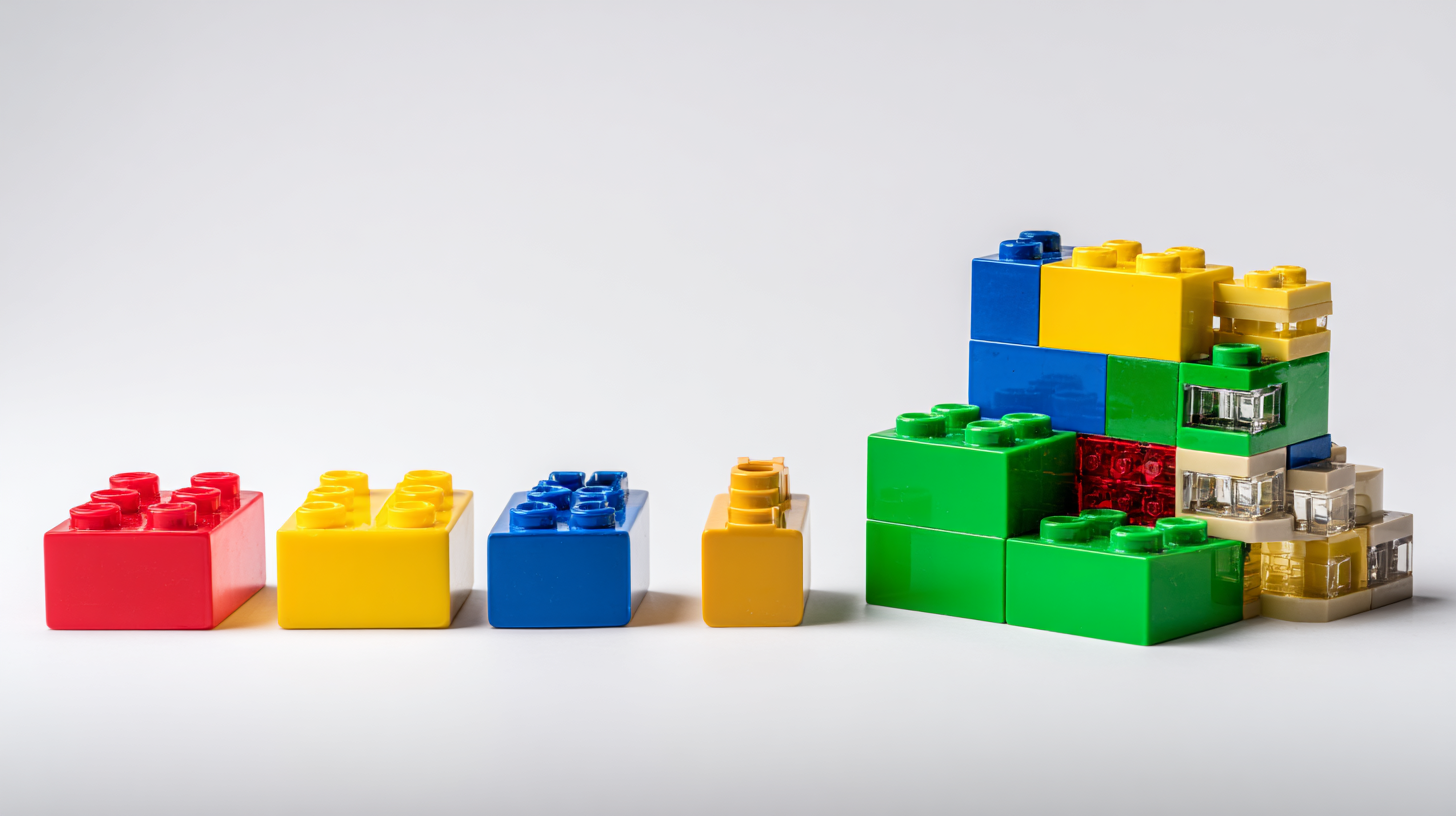
This is why native speech sounds smooth and natural. The speaker isn't building sentences from individual bricks. They're snapping together pre-fabricated sections. The assembly is minimal. The production is fast.
And this is why learners who study individual words sound halting and foreign — even when their vocabulary is large and their grammar is accurate. They're doing real-time construction where native speakers are doing chunk retrieval. The process is fundamentally slower.
The Working Memory Bottleneck
There's a hard limit on why word-by-word production fails in conversation: working memory.
Your working memory is the mental workspace where you hold and manipulate information in real-time. It's what you use to construct a sentence before you say it. And it can only hold a few items at once.
When you try to produce a sentence word by word in a foreign language, each word occupies a slot in working memory. "Quiero" — slot one. "Un" — slot two. "Café" — slot three. For a simple sentence, that's manageable. But real conversation requires longer sentences:
"I need a table for two near the window, please."
If every word is a separate item, that sentence requires your working memory to hold and sequence roughly twelve items simultaneously. That exceeds working memory capacity. The sentence collapses. You forget the beginning by the time you reach the end. You simplify. You hesitate. You sound like a beginner even if you know every word.
But if you've learned chunks, the load shrinks dramatically. "Necesito una mesa" is one chunk. "Para dos" is another. "Cerca de la ventana" is another. "Por favor" is another. Four chunks instead of twelve words. Well within working memory capacity.
Chunking doesn't just make you faster. It makes complex sentences possible. Without chunks, your working memory can't hold enough pieces to produce anything beyond simple sentences. With chunks, you can produce sophisticated language because each chunk only uses one working memory slot.
Why Traditional Methods Teach Words (And Why It Fails)
The reason most language learning methods teach individual words is historical, not scientific.
Traditional language education was built on the grammar-translation method: learn vocabulary lists, study grammar rules, then combine them to construct sentences. This approach treats language like mathematics — learn the components, learn the rules for combining them, then apply the rules in real time.
The problem is that human language production doesn't work like mathematics. You don't have time to apply rules in real-time conversation. By the time you've retrieved the words, selected the correct conjugation, arranged the word order, and checked the grammar, the conversation has moved on.
Modern apps inherited this word-by-word approach. Duolingo teaches individual vocabulary items and tests whether you can recognise or translate them. Anki flashcards present single words with their translations. Even comprehensible input methods, while better at providing context, still build understanding word by word — you gradually learn what each word means through repeated exposure.
None of these methods explicitly teach chunks. They assume that chunks will form naturally over time — that if you know enough individual words and enough grammar rules, your brain will eventually compress them into automatic phrases.
For some learners, after years of immersion, this does happen. But it's inefficient. You're asking your brain to figure out which words go together, how to compress them, and how to automate the compressed forms — all on its own, without any guidance. Most learners never get there.
The Chunk Advantage: Pre-Conjugated and Ready to Deploy
There's a specific advantage of learning chunks that's easy to overlook: chunks arrive pre-conjugated.
When you learn the individual word "querer" (to want), you know the infinitive. To use it in conversation, you have to conjugate it: quiero (I want), quieres (you want), quiere (he/she wants), queremos (we want), and so on. That's a conscious, multi-step process that requires grammar knowledge and processing time.
But when you learn the chunk "quiero un café," the conjugation is already done. "Quiero" is already in the first person. You don't need to know the conjugation table. You don't need to select the right form. It's baked into the chunk. You produce the whole phrase and the grammar comes free.
This is how native speakers handle grammar. They don't conjugate verbs consciously. They produce chunks that happen to contain correctly conjugated forms. The grammar is embedded in the phrase, not applied on top of it.
For learners, this means that chunks bypass the grammar bottleneck entirely. You don't need to master Spanish conjugation tables before you can speak. You just need to learn enough chunks, and the grammar takes care of itself.
Later, as you encounter patterns across multiple chunks — "quiero un café," "quiero dos cervezas," "quiero el menú" — your brain naturally extracts the underlying rule: "quiero" + (thing you want). You develop grammar intuitively, through pattern recognition, without ever studying a conjugation table. The chunks teach the grammar implicitly.
Chunks and the Three Brains
The three-brain framework explains why chunks are so powerful.
Your Thinking Brain stores individual words and grammar rules. When you try to speak using your Thinking Brain, you have to retrieve words, apply rules, and assemble sentences. This is slow, effortful, and breaks down under the time pressure of conversation.
Your Knowing Brain stores chunks — pre-built phrases that deploy automatically as single units. When you speak using your Knowing Brain, you produce whole phrases without conscious thought. This is fast, effortless, and operates at conversational speed.
The goal of language learning isn't to fill your Thinking Brain with more words and rules. It's to fill your Knowing Brain with chunks.
But chunks don't form in your Knowing Brain just because you know the individual words in your Thinking Brain. The transfer has to be trained. You need repeated production of the chunk as a complete unit, in a context that engages your Feeling Brain, until it becomes automatic.
This is exactly what happens when you learn a phrase through a song. You hear "quiero un café" as a complete unit, set to music. You sing it as a complete unit. The earworm loops it as a complete unit. Your Feeling Brain stays engaged throughout. And gradually, the chunk transfers from a phrase you consciously recall to a phrase you automatically produce.
The song doesn't teach you "quiero" and "un" and "café" separately and ask you to combine them. It teaches you "quiero un café" as one thing. The way native speakers store it. The way your Knowing Brain needs it.
The Multiplication Effect
Here's where chunks become extraordinarily efficient.
When you learn the chunk "quiero un café," you haven't just learned one phrase. You've learned a template: "quiero" + (thing). Once "quiero" is established as a chunk that means "I want," it combines with every object you know:
Quiero un café. Quiero dos cervezas. Quiero una mesa. Quiero el menú. Quiero más agua. Quiero la cuenta.
From one core chunk, you've generated six usable phrases. And as you learn more objects through other songs, the chunk keeps multiplying. "Quiero" eventually combines with hundreds of objects to produce hundreds of phrases — all deploying automatically because the core chunk is in your Knowing Brain.
This multiplication effect means you don't need to learn 3,000 phrases individually. You need to learn a relatively small number of high-frequency core chunks, and they combine with each other to generate thousands of phrases.
Four core chunks per song. Thirty-plus phrases per song. One hundred songs. Over three thousand phrases. Not because you memorised three thousand phrases — but because you internalised four hundred core chunks that multiply endlessly.
What the Research Says
The science behind chunking in language learning is extensive and consistent.
Nick Ellis (2001) showed that language acquisition is fundamentally a process of learning sequences — chunks of language that co-occur frequently. The brain tracks which words appear together and gradually compresses frequent combinations into single units. This happens naturally in first language acquisition and can be trained explicitly in second language learning.
Pawley and Syder (1983) argued that native-like fluency depends on having a large repertoire of "lexicalised sentence stems" — essentially, pre-built chunks that can be produced without grammatical computation. They showed that even highly proficient non-native speakers who lack these chunks sound non-native, regardless of their grammatical accuracy.
Nattinger and DeCarrico (1992) demonstrated that teaching "lexical phrases" — functional chunks like "would you mind if," "as far as I know," "the thing is" — produces faster speaking gains than teaching equivalent vocabulary and grammar separately.
And Boers et al. (2006) found that learners who were explicitly taught to notice and learn formulaic sequences in input showed significantly better speaking fluency than control groups who received the same input without the focus on chunks.
The consensus is clear: chunks are not a shortcut or a simplified approach. They are how language naturally works. Teaching chunks isn't "dumbing down" language learning. It's aligning the teaching method with how the brain actually stores and produces language.
Why You Already Know This
You've experienced the power of chunks in your native language without realising it.
Think about phrases you use every day: "by the way," "I mean," "you know what," "at the end of the day," "to be honest," "the thing is," "I was going to say." You don't construct these from individual words each time you say them. They come out as single units. They're chunks.
Now think about learning a language. Every time you've picked up a foreign phrase as a complete unit — "por favor," "gracias," "no problem," "c'est la vie" — it deployed effortlessly because it was stored as a chunk. You didn't assemble it. You just said it.
The mistake isn't that you can't learn chunks. You already do, naturally, for the few phrases you've picked up organically. The mistake is relying on methods that teach you individual words and expect you to form chunks on your own. Most people never do.
The solution is a method that teaches chunks directly. That gives you "quiero un café" as a single unit from day one, not "querer" + conjugation rules + article selection + "café" as separate components to be assembled under pressure.
That's what songs do. Every line is a complete chunk. Every repetition strengthens the chunk as a unit. Every earworm loops the chunk automatically. Your Knowing Brain fills up with ready-to-deploy phrases — not raw materials waiting for assembly.
Words are bricks. Chunks are buildings. Stop collecting bricks. Start learning buildings.
About Outputly
Every Outputly song teaches 4 high-frequency chunks that multiply into 30+ usable conversational phrases. The chunks arrive pre-conjugated, ready to deploy, and set to music that makes them stick as earworms.
You don't learn words and hope they become phrases. You learn phrases from day one and let your brain extract the grammar naturally.