"I'm too old to learn a language."
It's one of the most commonly repeated beliefs about language learning. And it stops millions of adults from even trying. They heard somewhere that there's a critical period — a window in childhood that closes around puberty — after which language acquisition becomes impossible or nearly so.
They remember struggling with school languages. They compare themselves to children who seem to absorb new languages effortlessly. And they conclude that their brain simply can't do it anymore.
This belief is wrong. Not slightly wrong. Fundamentally wrong. And the neuroscience is clear about why.
Where the Myth Comes From
The Critical Period Hypothesis was proposed by neurobiologist Eric Lenneberg in 1967. He suggested that there's a biologically determined window for language acquisition — roughly from age two to puberty — during which the brain is optimally suited for learning language. After this window closes, language learning becomes fundamentally more difficult.
Lenneberg's hypothesis was based primarily on observations of first language acquisition. Children who are deprived of language exposure during the critical period (due to extreme cases of isolation or neglect) often fail to develop full native-like language ability later. This is real and well-documented.
But the critical period for first language acquisition has been widely — and incorrectly — applied to second language learning. These are different processes. First language acquisition builds the brain's entire language system from scratch. Second language acquisition adds to an already-functioning system.
The distinction matters enormously.
What the Research Actually Says
The largest study ever conducted on age and second language learning was published by Hartshorne et al. (2018) in the journal Cognition. The study analysed data from nearly 670,000 people learning English.
Their findings were nuanced — and much more encouraging than the critical period myth suggests.
The study found that the ability to reach native-like grammatical accuracy declines after about age 17. However, the ability to learn and use a second language at a high functional level doesn't have a clear cutoff age. Adults in their 30s, 40s, 50s, and beyond can and do reach high levels of second language proficiency.
The key word here is "native-like." Adults may not sound exactly like someone who grew up speaking the language. But sounding native and being fluent are not the same thing. Fluency means communicating effectively, naturally, and at conversational speed. Adults achieve this routinely.
The Adult Brain Has Advantages
The myth assumes that the child's brain is superior for language learning in every way. It isn't. Children have some advantages. Adults have others.
Children are better at acquiring native-like pronunciation and absorbing grammar implicitly through exposure alone. Given enough time and immersion, they develop language that's indistinguishable from native speakers.
But adults are better at explicit learning, pattern recognition, vocabulary building, and using existing knowledge to accelerate new learning. An adult already has a complete language system in their native language — a massive database of concepts, grammar intuitions, and communication strategies that they can leverage when learning a second language.
Adults also have metacognitive skills that children lack — the ability to understand their own learning process, identify weaknesses, and choose appropriate strategies. A child absorbs. An adult can strategise.
Research by Krashen (2004) found that adults actually progress through the early stages of second language acquisition faster than children. Adults learn more vocabulary in less time, understand grammar explanations more quickly, and can use context clues more effectively.
Children "win" only in the long run — given years of full immersion, they'll eventually achieve native-like proficiency. But most adult learners aren't aiming for native-like perfection. They're aiming for functional fluency. And for that goal, the adult brain is more than capable.
Neuroplasticity Doesn't Stop
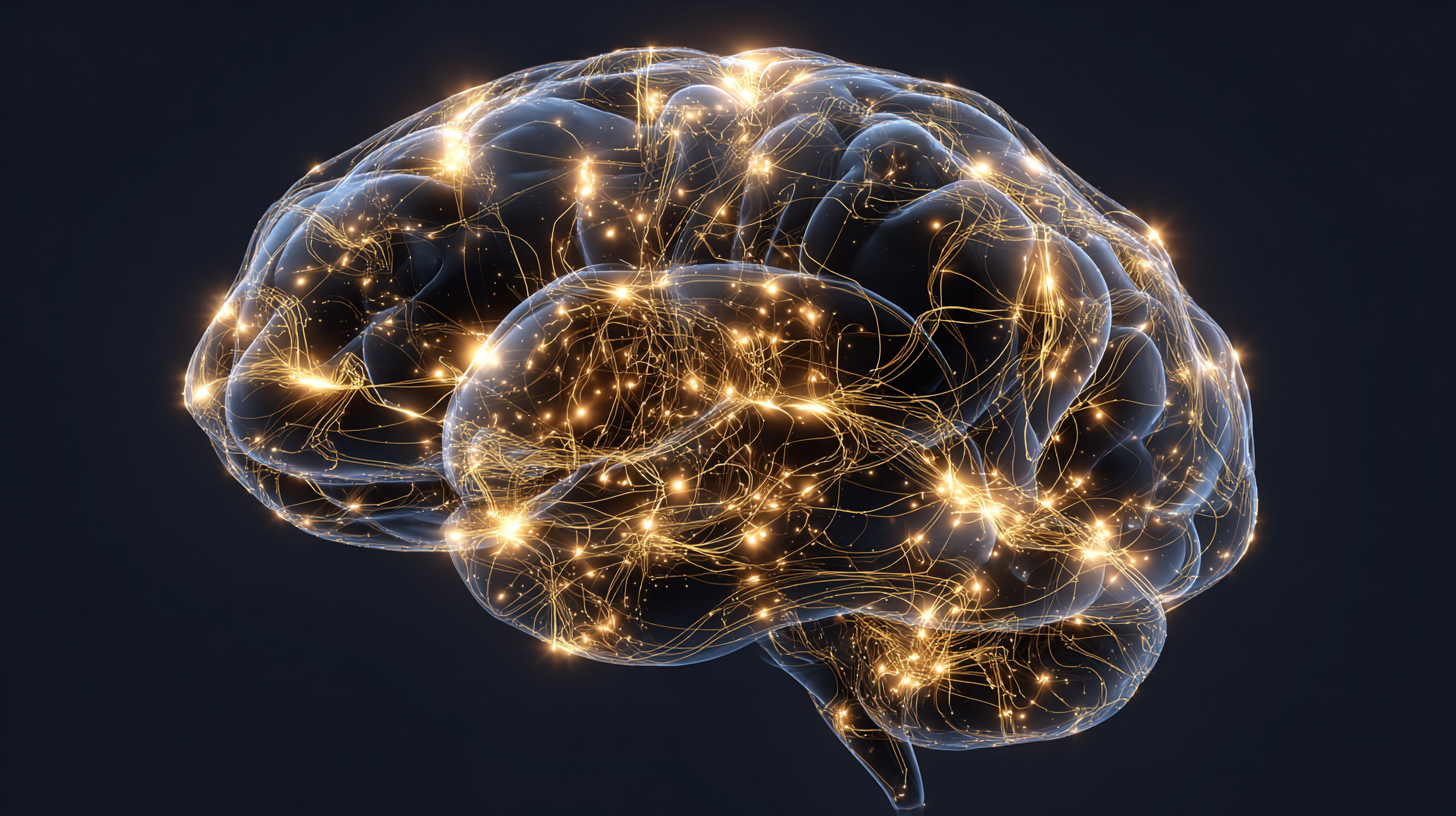
The critical period myth implies that the brain becomes fixed and rigid after childhood — that it loses the ability to form new language pathways. Modern neuroscience has comprehensively debunked this.
Neuroplasticity — the brain's ability to form new neural connections and reorganise existing ones — continues throughout life. It slows with age but never stops. Studies have shown new neural pathway formation in people in their 70s and 80s.
Li et al. (2014) used brain imaging to show that adult language learners develop new white matter connections between brain regions when learning a second language — structural brain changes that parallel what happens in childhood language development. The adult brain physically reshapes itself in response to language learning.
Mårtensson et al. (2012) found that military recruits who underwent intensive language training showed measurable increases in brain volume in the hippocampus and cortical areas after just three months of study. The adult brain doesn't just form new connections — it literally grows in response to language learning.
Your brain at 25, 35, 45, 55, or 65 is physically capable of learning a new language. The neural machinery works. The plasticity is there. The only question is method.
Why Adults Fail (And It's Not Age)
If adults can learn languages, why do so many fail?
Not because of age. Because of method, time, and anxiety.
Most adult language learning methods are boring, stressful, and require dedicated study time that working adults don't have. Adults try Duolingo for two weeks and quit. They sign up for a class, attend three sessions, and stop. They buy a textbook, complete chapter one, and it gathers dust.
They don't fail because their brain can't learn. They fail because the method doesn't fit their life, doesn't engage their Feeling Brain, and creates anxiety instead of enjoyment.
Children have one massive advantage that has nothing to do with brain biology: they have time. A child is immersed in language for thousands of hours. An adult tries to squeeze in fifteen minutes between work and dinner.
Given equal exposure time and a method that engages the Feeling Brain, adults can learn remarkably quickly. The bottleneck was never the brain. It was always the method.
The Anxiety Barrier
The second factor is anxiety — and it affects adults far more than children.
Children don't worry about sounding foolish. They don't compare themselves to native speakers. They don't have years of failed language classes creating a conditioned anxiety response.
Adults carry all of this. The memory of freezing in a school oral exam. The embarrassment of mispronouncing a word in front of colleagues. The belief that they're "bad at languages" based on a single experience decades ago.
This anxiety raises the affective filter that Krashen described, making it harder for new language to be processed and retained. The adult brain is capable — but anxiety is blocking it.
A method that removes anxiety — that doesn't test, judge, or expose you to social embarrassment — unlocks the adult brain's full capability. When the filter is down and the Feeling Brain is engaged, adults learn fast.
The Feeling Brain Doesn't Age
Here's the most important fact for adult language learners: your Feeling Brain doesn't deteriorate with age.
Music still triggers dopamine release at 50. Catchy songs still become earworms at 60. Pleasurable experiences still accelerate memory consolidation at 70. The neurochemistry of reward-based learning doesn't have a critical period.
If anything, adults appreciate music more than children. They have richer emotional responses. They engage more deeply with lyrics. The Feeling Brain is as powerful at 45 as it was at 15 — possibly more so.
A language learning method built on Feeling Brain activation — music, pleasure, earworms — works at any age. Because the mechanism that drives the learning doesn't age.
You're not too old to learn a language. You've just been using methods designed for a brain that doesn't exist — a brain that can withstand boring, stressful, time-intensive study without quitting. That's not your brain. That's nobody's brain.
Your brain wants to learn through pleasure, reward, and music. It always has. It still does.
About Outputly
Outputly works for adults because it's designed for adult brains and adult lives. No study sessions. No exams. No classrooms. Just earworm songs that fit into your commute, your walk, and your daily routine.
Your brain can learn a language at any age. It just needs the right method.